There is rarely a dramatic breaking point. The signs are operational.
You Are Spending Too Much Time on Data Entry
Manual entry consumes hours each week. As transactions increase, the workload multiplies. Errors become more likely.
Cloud accounting software imports and categorizes transactions automatically. Instead of entering data, you review it.
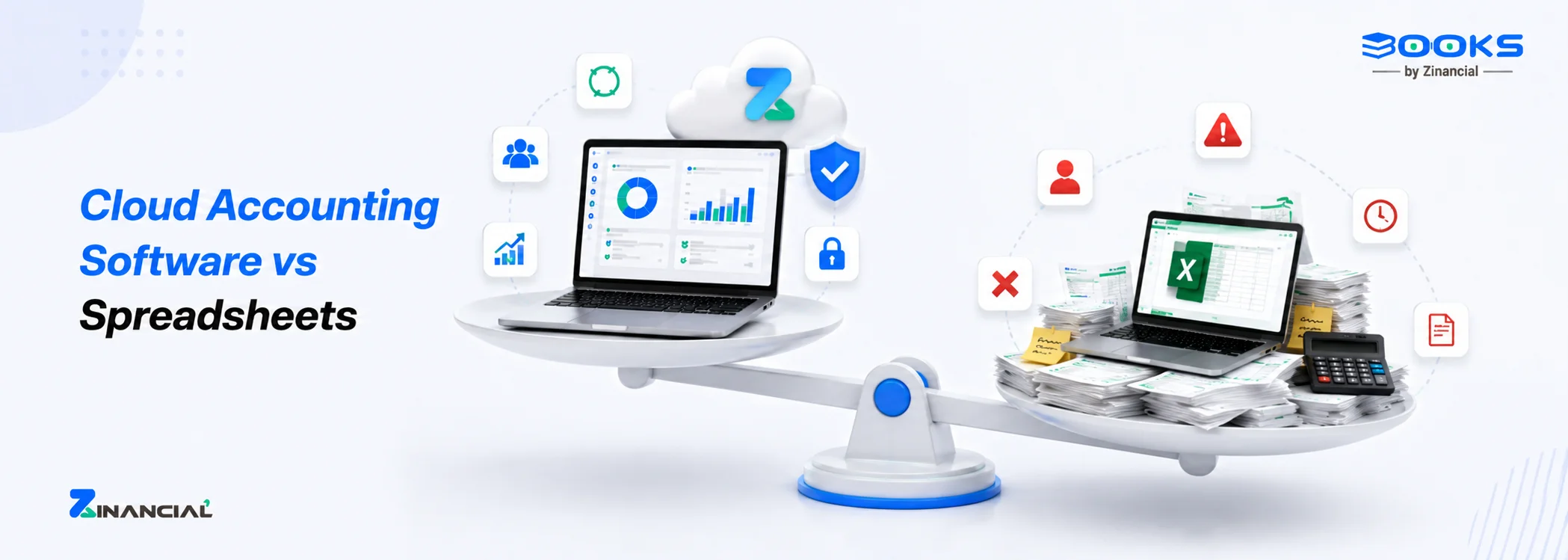
If bookkeeping feels repetitive and draining, it may be time to reconsider Excel vs accounting software.
Your Business Is Growing
Growth brings complexity. More invoices, more vendors, more compliance requirements. Spreadsheets can manage limited activity. They struggle when financial structures expand.
You Are Struggling with Financial Reporting
Building accurate financial statements in Excel requires formula discipline and structural precision. Many business owners delay reporting because it feels complicated.
Cloud accounting software generates profit and loss statements, balance sheets, and tax summaries instantly.
In the accounting software vs spreadsheets debate, reporting simplicity is often the deciding factor.
Tax Preparation Feels Risky
Manual tracking increases the chance of missed deductions or incorrect classifications. With cloud accounting software, expenses are categorized consistently. Tax ready reports are available when needed.
Research from KPMG shows that 62% of companies use AI in their finance functions, and 92% report these tools are meeting or exceeding ROI expectations, underscoring how automation enhances accuracy and insight.
Collaboration with Your Accountant Is Inefficient
Sharing multiple spreadsheet versions creates confusion. Email threads become long and disorganized.
Cloud accounting allows shared access to live data. Your accountant works within the same system you use.
That reduces friction and improves advisory value.