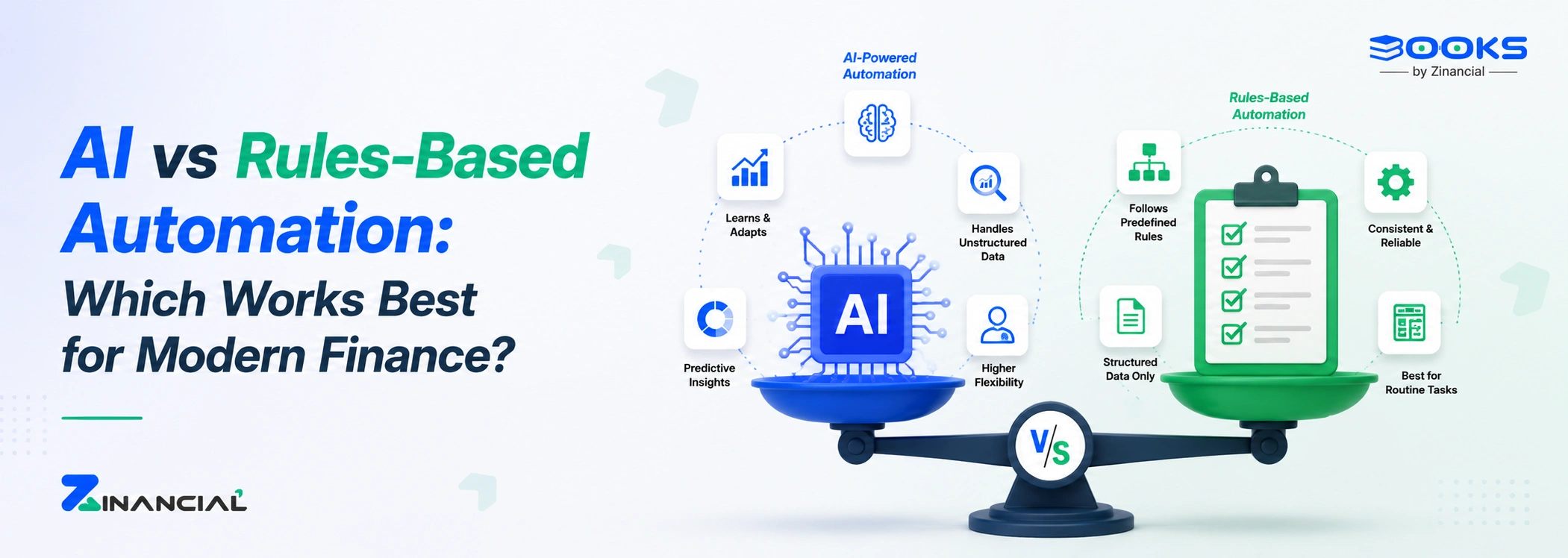
Finance teams are expected to move faster, close books quicker, and deliver insights in real time. At the same time, compliance requirements are getting stricter and data volumes are exploding. This is where the debate around AI vs automation becomes more than just a tech discussion.
It directly impacts how efficiently your finance function operates. Most businesses already rely on rules-based automation to handle structured workflows. It works well until complexity increases.
As data becomes unstructured and exceptions rise, these systems start slowing teams down instead of speeding them up. That is why the shift toward AI vs rule-based accounting automation is happening across finance teams of all sizes.
Finance used to operate in controlled environments with predictable inputs. Today, that is no longer true. Businesses deal with multiple systems, formats, and compliance layers, all while needing faster reporting cycles. This shift is forcing companies to rethink how they approach automation.
You are no longer working with just structured data. Invoices vary in format, transactions come from different systems, and financial data often lacks consistency. Traditional systems built on fixed logic struggle in these conditions, which creates delays and manual work.
Here is what is driving the shift toward modern finance automation tools:
- Increasing transaction volumes across systems
- Growing use of unstructured financial data
- Pressure for real-time financial visibility
- Frequent regulatory and compliance updates
71% of organizations are already using AI in their finance functions, according to KPMG. That tells you one thing clearly. This shift is already happening, not coming in the future.