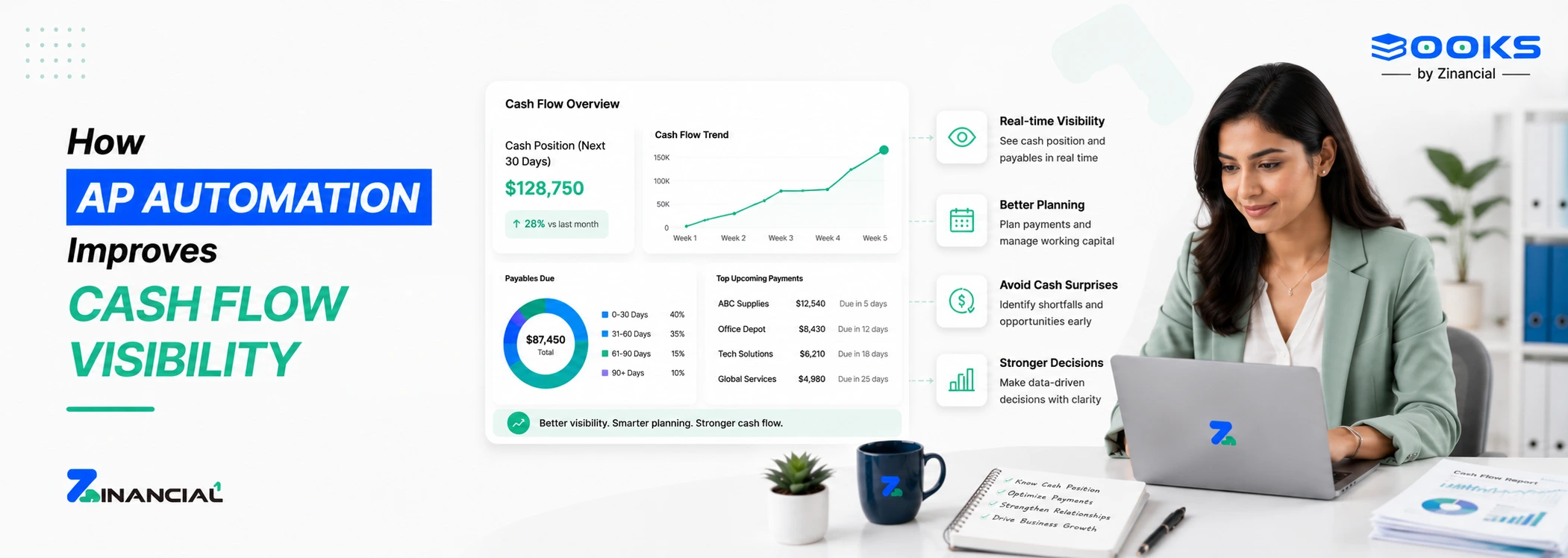
Cash flow problems usually do not start with revenue shortfalls. They start when you cannot see what cash is already committed. You might check your bank balance daily, yet still feel unsure about upcoming payments. That gap is exactly where cash flow visibility breaks down.
Most finance teams experience this during routine work. An invoice arrives in an inbox. Approval takes a few days. Payment timing stays unclear until the last moment. During that window, your reports look healthy, but your future cash position is already spoken for.
This is where AP automation benefits become practical. When accounts payable is structured from the moment an invoice arrives, you gain a live view of outgoing cash. This blog explains how AP automation improves cash flow, using situations you likely deal with every month.
In a manual AP setup, invoices are invisible until someone records them. The liability exists the moment the vendor sends it, but your system does not reflect it yet. During that delay, your cash picture is already outdated.
You may approve purchases, schedule campaigns, or commit to hiring based on balances that ignore pending invoices. This is not a reporting problem. It is a timing problem.
Common blind spots show up as patterns:
- Invoices approved days before payment deadlines
- Vendors following up before finance has context
- Month-end payment spikes
- Finance teams holding extra cash “just in case”
None of these issues come from poor discipline. They come from late recognition. When obligations enter the system after decisions are made, visibility arrives too late to help.
This is the core issue AP automation benefits are designed to fix. Automation changes when payables become visible, not just how fast they move.
See how Zinancial Books captures invoices early.