An audit-ready accounting system does more than help you pass an audit. It keeps your financial data accurate, traceable, and reliable throughout the year. Businesses that delay audit preparation often scramble to locate records, fix errors, and reconcile accounts at the last minute.
That approach creates risk. Missing documents, weak internal controls, and inconsistent processes can slow down audits and raise questions about accounting compliance.
The better approach is simple. Build your accounting processes so they are always audit-ready. When systems are structured correctly, audit preparation becomes a routine process instead of a stressful project.
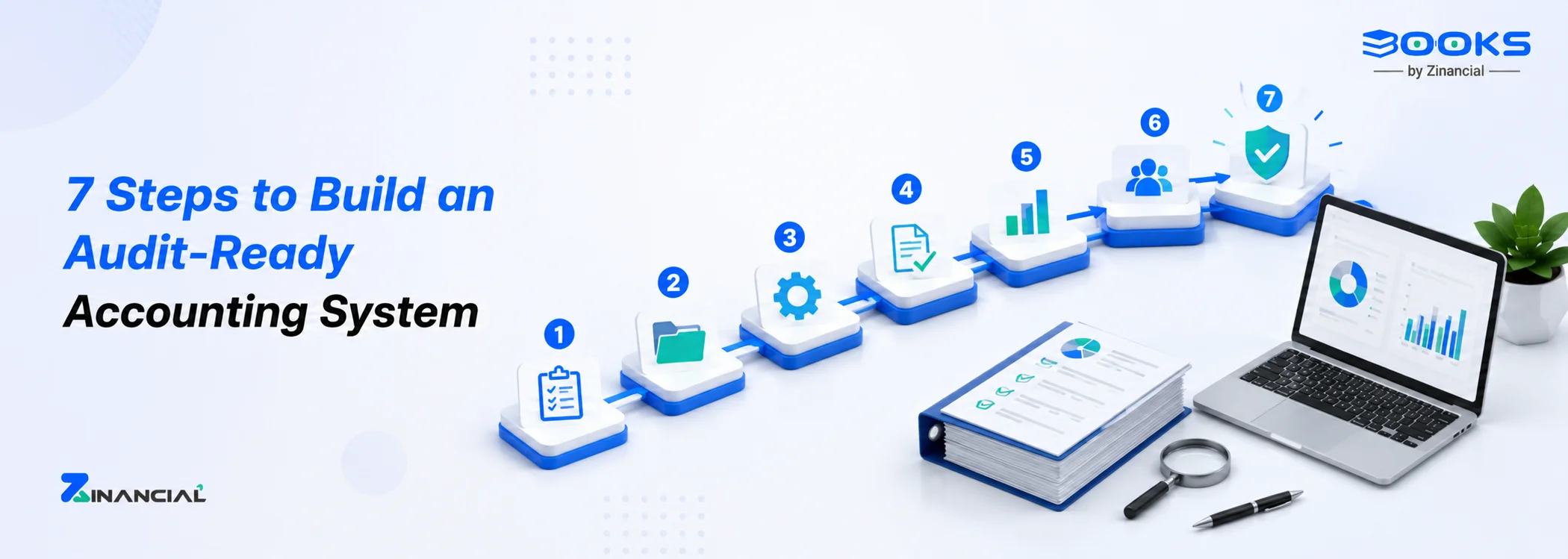
Here are seven practical steps that show how to prepare accounting for audit while creating a scalable financial system.
Strong internal controls are the foundation of audit-ready accounting. They reduce errors, prevent fraud, and create accountability across financial processes.
Without clear controls, the same person may record, approve, and reconcile transactions. That lack of separation increases risk and weakens accounting compliance.
Start by defining clear responsibilities across finance workflows.
Key internal controls for audit-ready accounting include:
- Segregation of duties so no single person handles an entire transaction cycle
- Approval workflows for vendor payments, expense claims, and journal entries
- Authorization controls for manual adjustments
- Role-based access inside accounting systems
Document these processes clearly. Auditors expect to see written policies that explain how financial controls work.
According to a research by Deloitte 82% of internal audit functions report increased impact on their organizations, yet only 14% believe they have reached their full potential.
Modern platforms like Zinancial Books help enforce these controls through structured approval workflows and permission settings. This reduces manual oversight and strengthens audit preparation throughout the year.