If you have ever opened a company’s balance sheet and felt confused, that reaction is common. Many non-accountants struggle with financial statements because they look technical and rigid. The structure, however, is logical. Once you understand the layout, it becomes easier to interpret.
This guide offers a balance sheet explained simply. You will understand what it shows, why it matters, and how to read a balance sheet without accounting training.
A balance sheet presents a company’s financial position at a specific date. It does not show performance across months. It shows what exists at one moment.
According to PwC’s guide to understanding financial statements, the balance sheet, also known as the statement of financial position, outlines assets and liabilities along with equity in a structured format.
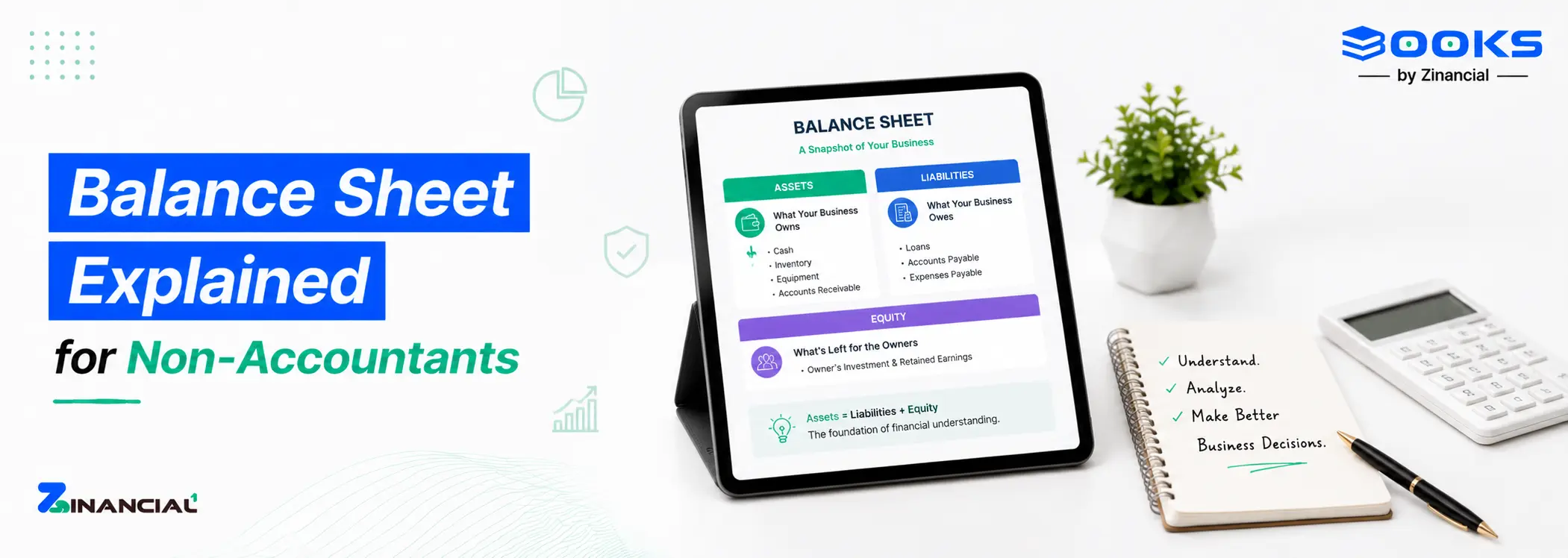
The structure follows a simple formula:
Assets = Liabilities + Equity
Every number in the document supports that equation.
If a business owns resources, those resources are financed either through borrowing or through owner investment. That is the core logic behind the balance sheet.
Understanding this structure becomes easier with tools like Zinancial Books. It keeps financial statements organized and easy to interpret. When you focus on that structure first, the rest becomes easier.
Start with the equation.