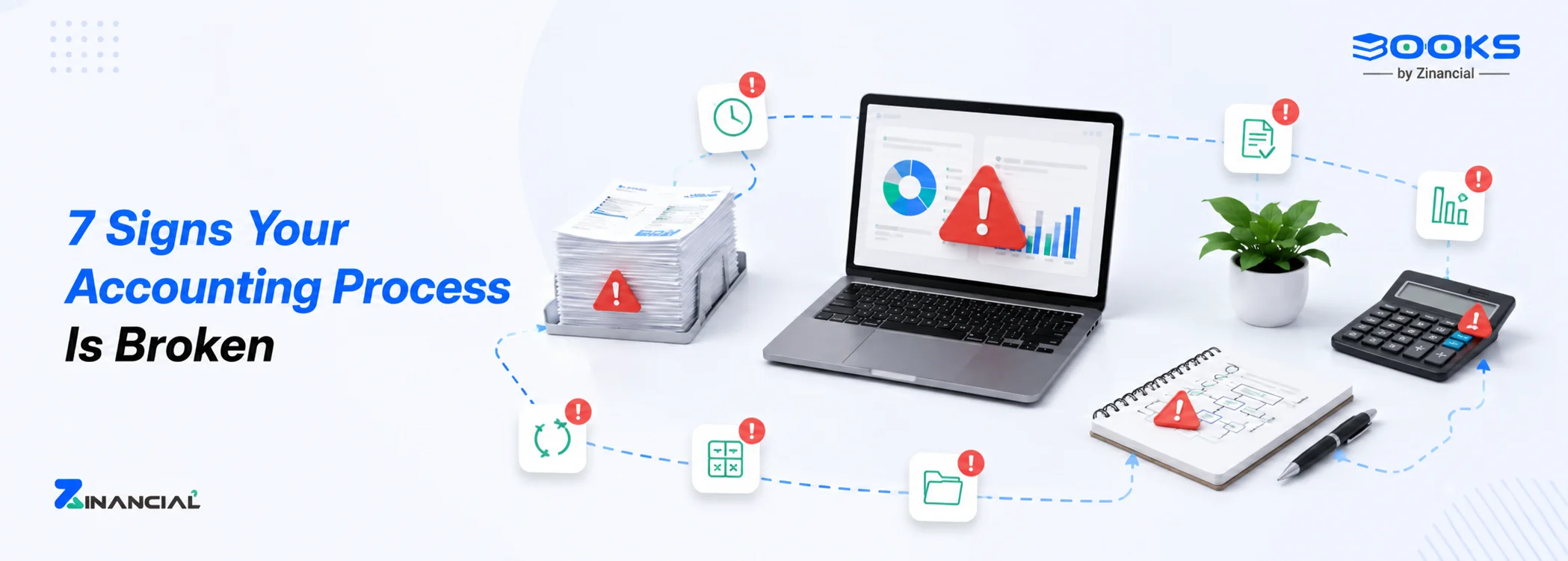
Most businesses do not notice accounting problems right away. At first, the issues seem small. A report arrives late. A reconciliation takes longer than usual. A number needs correction.
Over time, these small gaps turn into larger accounting process issues. Financial reports become unreliable. Teams spend more time fixing data than analyzing it. Decision-making slows down.
These situations usually point to deeper accounting process inefficiencies inside the finance workflow. When systems rely on manual updates, disconnected spreadsheets, or inconsistent documentation, the risk of accounting errors increases.
The good news is that these challenges usually show clear warning signs. If you know what to look for, you can identify the signs your accounting system is failing and fix them before they disrupt your business.
Financial reports guide business decisions. When they arrive late or contain frequent corrections, it usually signals serious accounting process issues.
In many companies, financial data is scattered across spreadsheets, emails, and disconnected tools. Teams spend hours combining information from different sources. This process increases the risk of accounting errors.
Some common reporting challenges include:
- Profit and loss reports that change after review
- Expenses categorized incorrectly
- Reports delivered weeks after the month closes
- Different teams working with different financial numbers
These patterns show clear accounting process inefficiencies. Leaders cannot rely on data that changes frequently or arrives too late to act on.
Many growing companies adopt tools like Zinancial Books to keep financial reporting consistent and organized across the business.