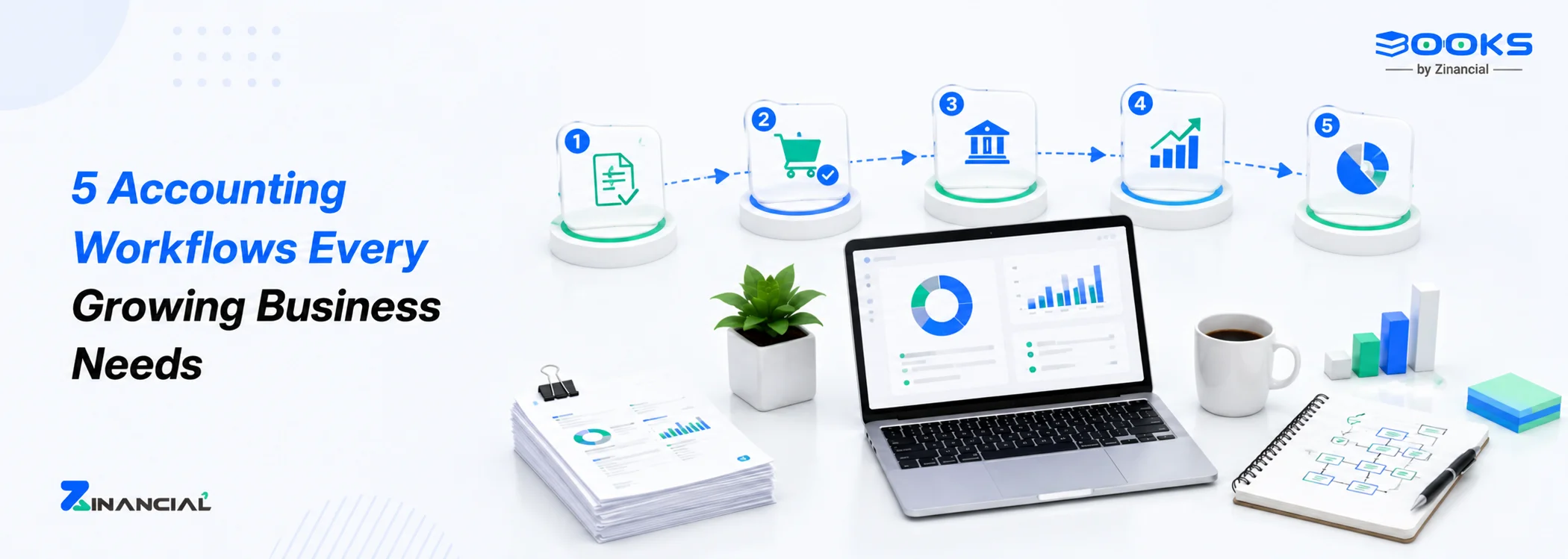
Growth brings more financial activity. Your business handles more invoices, expenses, and reports. As this volume increases, finance tasks become harder to manage. This is where accounting workflows become important. They create a clear system for handling financial tasks.
As businesses grow, transaction volume increases. Manual processes start slowing teams down. This is why structured accounting workflows for growing businesses are becoming essential.
According to EY, 82% of organizations are actively investing in automation and AI in finance functions, showing how quickly finance operations are moving toward structured digital workflows.
Vendor invoices increase as your business grows. Suppliers send bills through emails, portals, or documents. Without clear accounting workflows, invoices can easily get lost.
A structured invoice process solves this problem. These business accounting workflows help businesses capture, verify, and approve invoices in a clear order.
This ensures vendors get paid on time and finance teams avoid errors.
Vendor Invoice Workflow
| Step |
Activity |
Outcome |
| Invoice Intake |
The system receives invoices from email or uploads. |
All vendor invoices stay in one place. |
| Data Extraction |
The system captures invoice details automatically. |
Invoice data enters the system accurately. |
| Verification |
The finance team checks invoices against purchase orders. |
Incorrect invoices are identified quickly. |
| Approval Routing |
The system sends invoices to managers for approval. |
Only approved invoices move to payment. |
These accounting workflows for growing businesses prevent duplicate payments. They also reduce the risk of late payment fees.
Many businesses now use accounting software to manage these finance workflows. One such platform is Zinancial Books. It helps teams capture invoices and manage approvals through structured workflows.