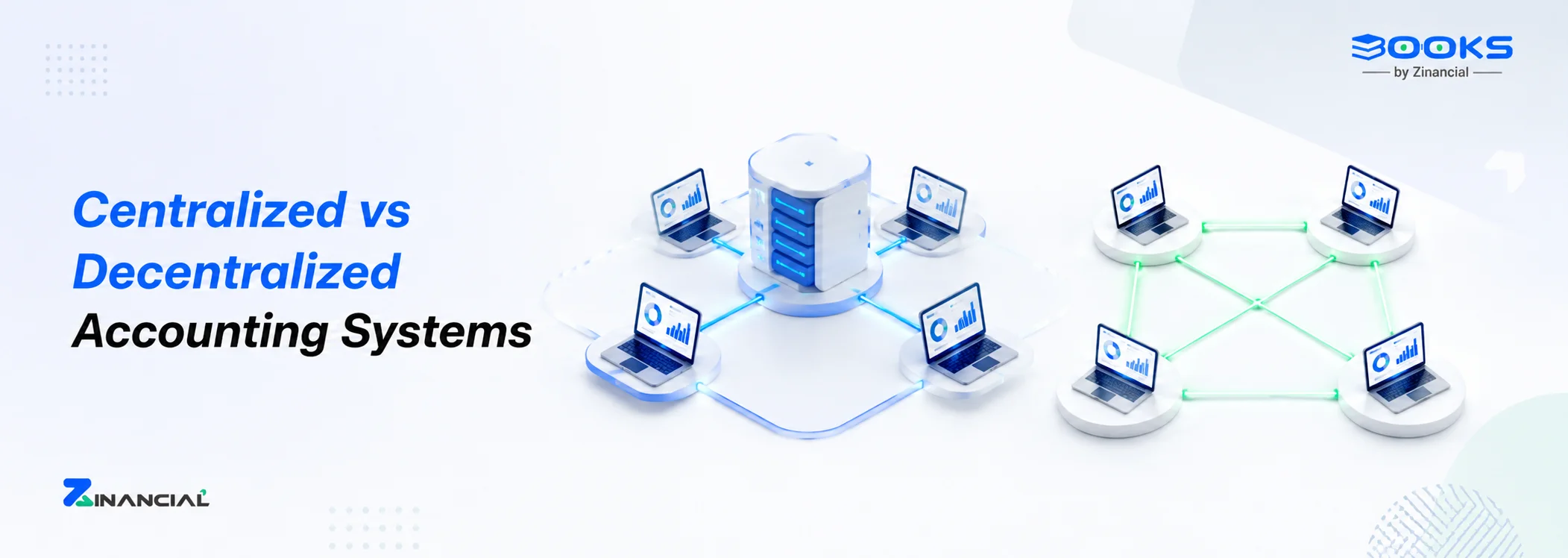
Choosing the right accounting systems structure affects how quickly your business can act on financial information. It also shapes reporting accuracy, internal oversight, and operational flexibility.
Many companies evaluate centralized accounting and decentralized accounting to decide how financial data should flow across teams and locations. The decision often depends on company size, growth plans, and the complexity of the finance structure.
Businesses often rely on platforms like Zinancial Books to build scalable accounting systems that support both centralized oversight and distributed financial operations.
This centralized vs decentralized accounting comparison helps you understand how both models work, where they perform best, and which structure fits your organization.
A centralized accounting model places all financial operations under one central department. This team manages bookkeeping, reporting, reconciliations, and compliance for the entire organization.
Instead of multiple departments handling their own records, all financial data flows into one system. This approach creates a unified view of the company’s financial performance.
According to an EY finance transformation survey, 58% of CFOs say increasing centralization through shared service centers is a priority for their finance operating model.