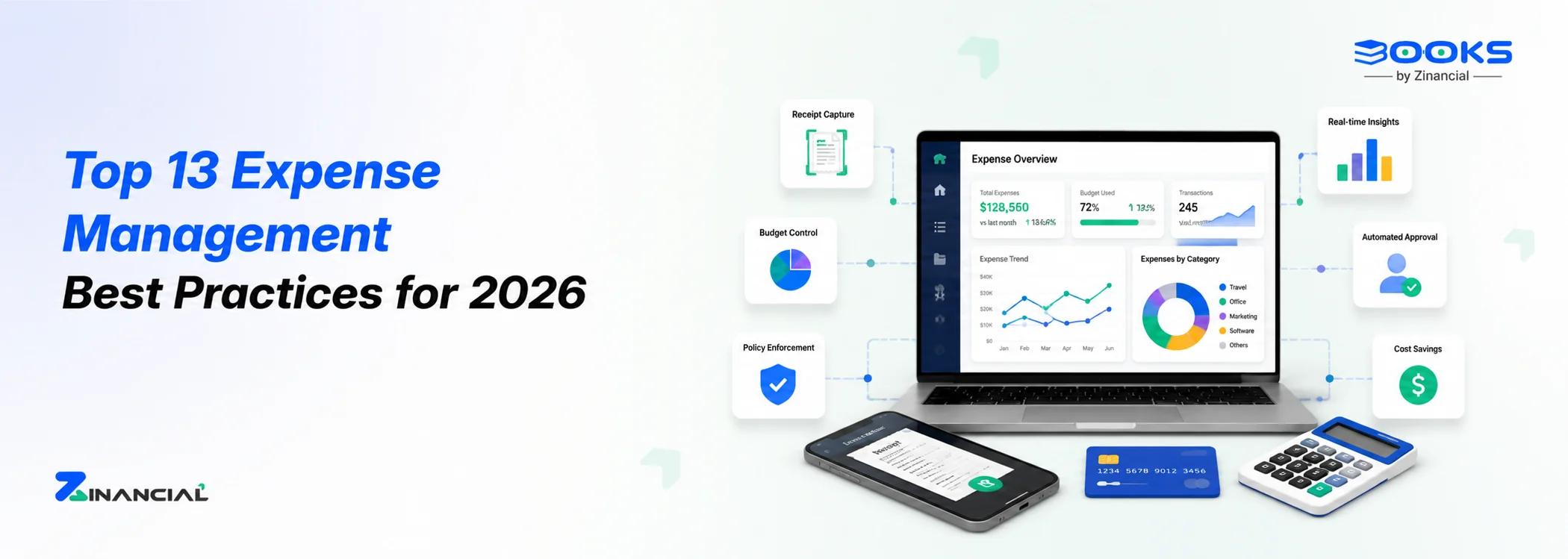
Here are best practices that companies can use to successfully develop, oversee and run their expense management processes.
1. Create a Clear Expense Policy
A defined policy is the foundation of effective expense management.
Employees need clear rules on which expenses are reimbursable and which are not. Without guidelines, expense categorization becomes inconsistent.
Your policy should include:
- reimbursable expense categories
- non-eligible spending types
- documentation requirements
Policies should also consider tax regulations. Some expenses, like commuting between home and work, are typically not deductible.
Finance teams using Zinancial Books can embed policy rules into expense workflows so transactions follow the same accounting best practices automatically.
2. Automate Expense Management
Manual processes slow finance teams and create errors.
Automation improves both speed and accuracy in expense categorization.
Automated systems can handle:
Recurring transactions follow predefined cost categorization rules. For example:
- SaaS subscriptions → software expenses
- ad spend → marketing costs
- flights → travel expenses
Tools like Zinancial Books apply rule-based and AI tagging to maintain consistent expense management records. PwC reports that 85% of CFOs are already using or considering robotic process automation in finance processes.
3. Issue Corporate Credit Cards
Corporate cards simplify expense tracking.
Instead of processing reimbursements, companies can capture transactions directly. This improves expense management and speeds up reporting.
Benefits include:
- centralized spending data
- fewer reimbursement delays
- better cash-flow management
Companies can also issue virtual or limited cards for tighter control.
When card transactions sync with Zinancial Books, expenses are automatically categorized, improving cost categorization consistency.
4. Make Expense Reporting Simple
Employees submit expenses faster when reporting systems are easy.
Complicated workflows often lead to missing receipts and inaccurate expense categorization.
Modern reporting systems allow:
Paper receipts fade and get lost. Digital documentation improves expense management accuracy.
Platforms like Zinancial Books allow employees to upload receipts and attach them to categorized expenses instantly.
5. Audit Expense Processes Regularly
Expense systems require continuous monitoring.
Regular audits help companies maintain accurate expense categorization and identify policy violations.
Finance teams should review expenses to:
- identify duplicate reimbursements
Categorized reports generated by Zinancial Books make these reviews faster and more reliable.
6. Go Paperless With Digital Records
Paper receipts create unnecessary problems.
Digital documentation improves expense management accuracy and accessibility.
Best practices include:
- attaching descriptions to transactions
- maintaining centralized records
Platforms like Zinancial Books allow employees to upload receipts and attach them to categorized expenses.
This ensures every transaction has supporting documentation.
7. Review Expenses Frequently
Waiting until year-end to review expenses is risky.
Frequent reviews improve expense management visibility and strengthen expense categorization accuracy.
During reviews, finance teams should evaluate:
- whether expenses were necessary
- whether categories are accurate
- whether spending trends are changing
With Zinancial Books, categorized reports show spending patterns instantly.
8. Train Employees on Expense Tracking
Employees play an important role in expense categorization.
Training programs should explain:
- documentation requirements
This helps companies maintain consistent cost categorization across departments.
Tools like Zinancial Books guide employees through structured expense submission workflows.
9. Encourage Spending Transparency
Transparent spending improves accountability.
When employees understand how expenses are monitored, they are more likely to follow company policies.
Organizations can improve transparency by:
- sharing expense reports with managers
- recognizing cost-saving ideas
- reviewing department spending trends
Centralized dashboards in Zinancial Books give leadership visibility into categorized expenses.
10. Prevent Expense Fraud
Fraud often occurs when policies are unclear.
Clear expense management rules reduce this risk.
Prevention strategies include:
Automated platforms like Zinancial Books help finance teams detect unusual transactions and maintain accurate expense categorization.
11. Negotiate Better Travel Rates
Travel is often a major expense category.
Companies can reduce spending by negotiating rates with travel providers.
Common strategies include:
- corporate airline discounts
Proper expense categorization helps finance teams analyze travel spending and identify negotiation opportunities.
Reports from Zinancial Books make this analysis easier.
12. Use Travel Reward Programs
Many travel providers offer reward programs.
Companies can reduce costs by accumulating points for flights, hotels, and rentals.
Encouraging employees to use preferred vendors helps maximize rewards.
Accurate expense categorization helps businesses identify where reward programs deliver the most value.
13. Implement Expense Management Software
The most effective way to improve expense management is to adopt automated software.
Manual systems cannot handle growing transaction volumes.
Expense software automates:
- transaction categorization
Tools like Zinancial Books simplify the best way to categorize expenses in accounting by organizing transactions automatically.
Finance teams gain accurate reports and better spending visibility.