Accounts payable rarely collapses in a single moment. It gradually becomes harder to manage as invoice volume increases, approvals take longer, and small errors pile up. For many teams, this is when automated accounts payable stops being a theoretical upgrade and becomes essential.
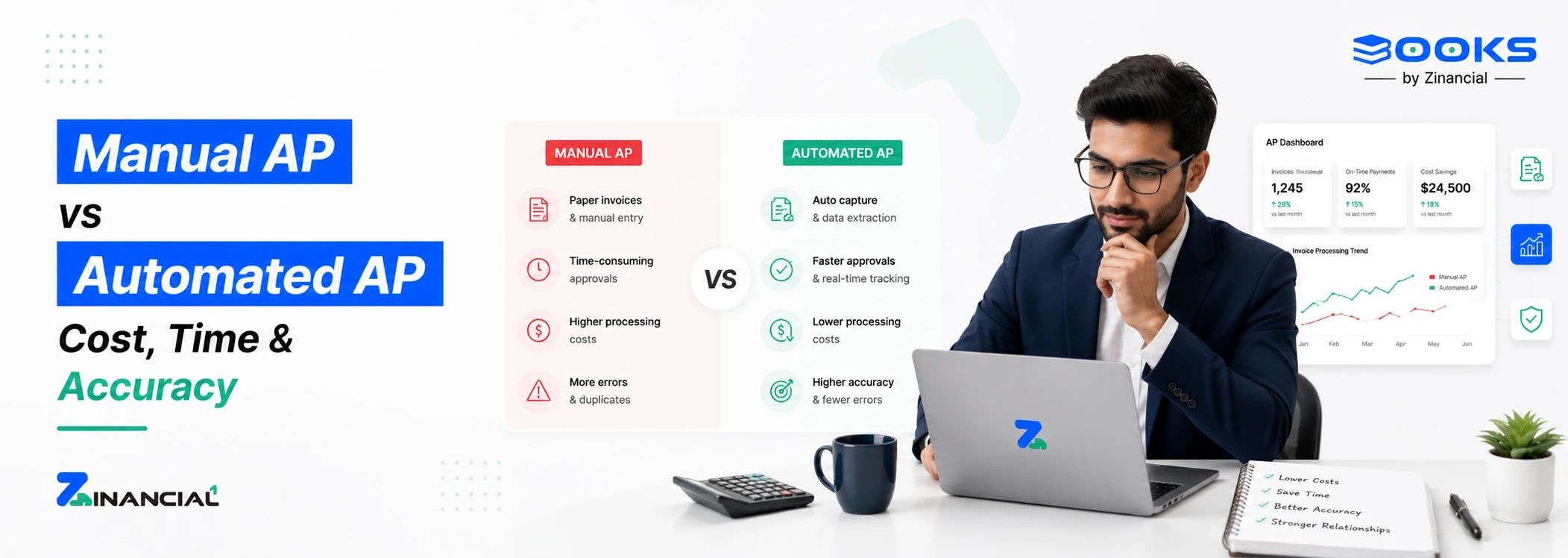
This guide compares manual vs automated accounts payable across cost, time, and accuracy. Each section focuses on a different operational reality rather than repeating automation claims. The goal is to help you understand where your current AP workflow starts to strain.
If this sounds familiar, your AP process is likely carrying more load than it should.
Manual accounts payable rarely operates from a single system. Invoices arrive through email, paper, portals, or shared drives, forcing teams to manage intake across disconnected channels.
A typical manual AP workflow involves:
- Downloading and renaming invoices
- Entering data line by line into accounting systems
- Sending approval requests over email
- Tracking payment status in separate files
This approach depends on follow-ups and memory. Clear invoice state exists only when someone actively checks, which becomes increasingly difficult as volume grows.
Understand what a centralized AP workflow looks like in practice.