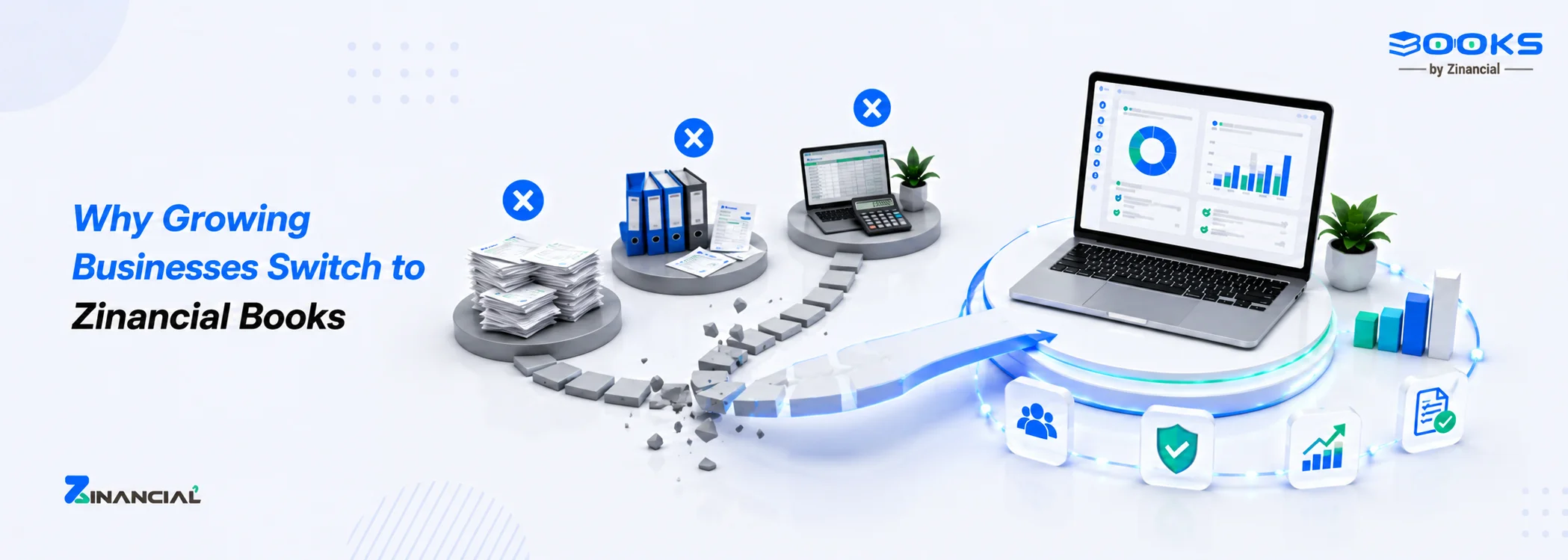
As your business grows, financial complexity increases. Transactions rise, teams expand, and reporting expectations become stricter. You may begin with spreadsheets or entry-level tools, and that works in the early stages. However, these systems often struggle once operations scale. This is where modern accounting software becomes essential.
As a growing business, you need faster reporting, clearer financial visibility, and automation that removes manual work. According to Deloitte’s CFO Signals Survey, 87% of CFOs expect artificial intelligence to be extremely or very important to finance operations.
This shift explains why many businesses move toward scalable accounting software like Zinancial Books. It helps you move beyond fragmented processes and manage finances with greater clarity and control.
In the early stages, you might manage finances using spreadsheets or basic accounting tools. Initially, this approach works. As your business expands, financial operations become more complex.
More transactions mean more manual entries, more reconciliation work, and more chances for errors. Over time, these manual processes begin to slow down financial operations.
Common challenges include:
- Manual data entry across multiple spreadsheets
- Limited financial reporting
- Difficulty tracking expenses and cash flow
- Disconnected financial systems
- Delayed month-end closing
Many finance teams still rely on manual processes and fragmented systems. An EY survey highlights the urgency for modernization, showing that 86% of finance and tax leaders consider data, AI, and technology a top priority for their organizations.
A modern accounting software platform removes these bottlenecks. It automates routine tasks and organizes financial data in one system.
However, not every platform is built to grow with the business. This is where scalable accounting software becomes critical.