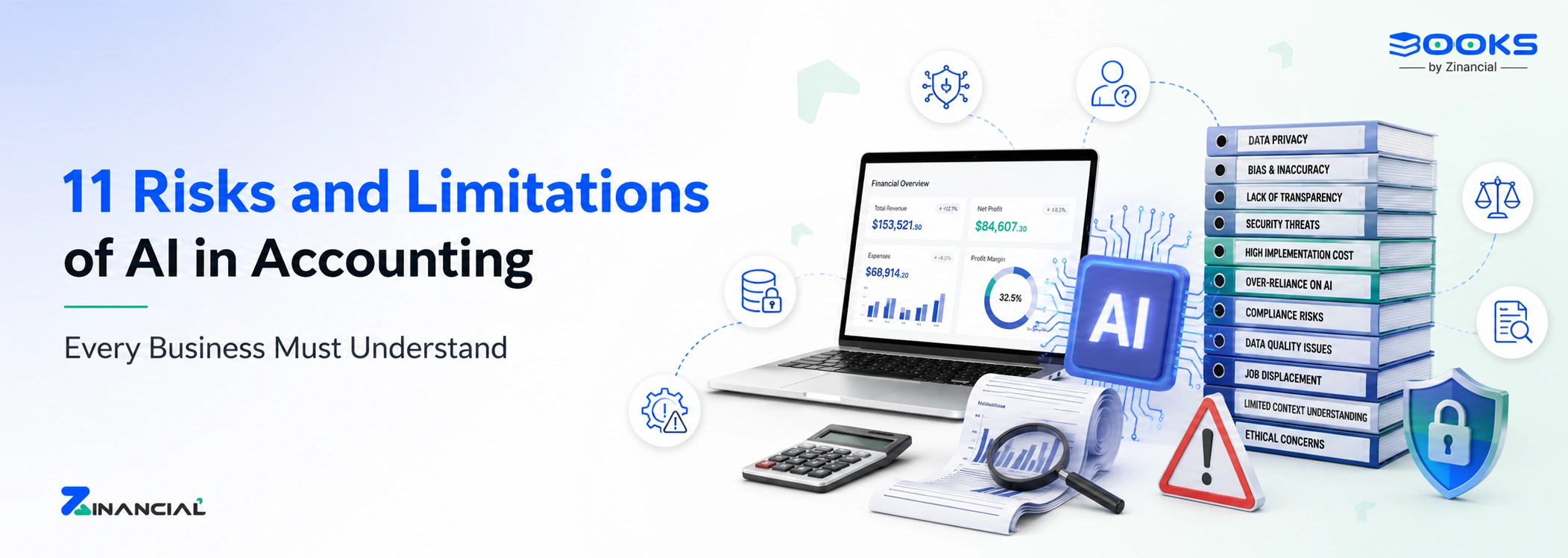
AI in accounting is driving faster closes, automated workflows, and real-time insights across finance teams. It reduces manual effort and improves efficiency, making it a critical part of modern financial operations. However, alongside these benefits come significant AI accounting risks that firms must actively manage.
Many organizations adopt AI expecting immediate gains without fully understanding the trade-offs involved. This creates exposure to errors, compliance gaps, and operational inefficiencies that scale quickly. Recognizing AI limitations early allows firms to build a controlled and sustainable adoption strategy.
AI is not inherently risky, but poor implementation makes it so. Without proper oversight, the risks of using AI in accounting can outweigh the efficiency gains. A structured approach is essential to balance automation with accuracy.
AI introduces a new layer of complexity into accounting systems, impacting data, workflows, and decision-making. These risks are interconnected and often compound when left unaddressed. Understanding them in depth helps reduce long-term accounting technology risks.
1. Data Privacy and Security Risks
AI systems rely on large volumes of sensitive financial data to function effectively. This includes transaction records, client information, and internal financial data that must remain protected. As AI adoption increases, so does exposure to AI accounting risks related to breaches and unauthorized access.
Financial systems integrated with AI often connect across multiple tools and platforms. This increases vulnerability, especially when third-party vendors are involved. Weak security frameworks can turn AI systems into entry points for cyber threats.
Key risk factors include:
Unauthorized access to financial data
Weak API and system integrations
Poor vendor security standards
Data exposure through cloud tools
AI amplifies security gaps if your data infrastructure is not strong. Research across finance leaders shows over 50% of organizations express concerns around technology risks, especially security and compliance, reinforcing the risks of using AI in accounting.
2. Lack of Human Judgment and Context
AI systems are designed to process data, not interpret context. Accounting requires judgment, ethical reasoning, and understanding of business nuances. This gap represents one of the most critical AI limitations.
Complex accounting tasks cannot rely entirely on automation. Decisions involving audits, compliance, and financial strategy require human expertise. Without it, the risks of using AI in accounting increase significantly.
Where AI falls short:
- Revenue recognition decisions
- Audit evaluations
- Risk assessments
- Strategic planning
AI supports decisions but cannot replace professional judgment.
3. Errors and AI Hallucinations
AI systems can generate inaccurate or fabricated outputs, especially when dealing with incomplete data. These hallucinations often appear confident, making them difficult to detect. This creates serious AI accounting risks in financial operations.
Errors become more dangerous when they scale across automated workflows. A single incorrect input can impact multiple reports and decisions. This significantly increases accounting technology risks.
Common AI error risks:
- Incorrect classifications
- Fabricated financial insights
- Misinterpretation of data
- Faulty summaries
Unchecked AI errors can lead to large-scale financial inaccuracies.
4. Bias and Lack of Transparency
AI systems learn from historical datasets that may contain biases. These biases can influence outputs, leading to skewed financial analysis. This is one of the more subtle yet impactful AI limitations.
Many AI models also lack explainability, making it difficult to understand how decisions are made. This creates challenges in audits and compliance. It also increases the risks of using AI in accounting.
| Risk Area |
Impact |
| Data bias |
Skewed analysis |
| Black-box models |
Poor transparency |
| Lack of explainability |
Compliance issues |
| Hidden errors |
Audit challenges |
If outputs cannot be explained, they cannot be trusted.
5. Over-Reliance and Skill Gaps
Automation improves efficiency but can create dependency over time. Teams may begin to rely heavily on AI without validating outputs. This leads to reduced oversight and declining analytical skills.
This is one of the long-term accounting technology risks firms often overlook. A workforce dependent on AI loses the ability to identify errors. This increases overall AI accounting risks.
Key concerns include:
- Reduced critical thinking
- Blind trust in automation
- Loss of accounting expertise
- Weak internal controls
AI should enhance human capability, not replace it. Platforms like Zinancial Books help maintain this balance by combining automation with structured workflows and human oversight. This ensures teams stay in control while reducing repetitive work.
6. Dependency on High-Quality Data
AI systems depend entirely on data quality. Inaccurate or inconsistent data leads to flawed outputs. This makes data dependency one of the most fundamental AI limitations.
Accounting data is often fragmented across systems. Manual entries and legacy systems create inconsistencies. This increases the risks of using AI in accounting.
Data challenges include:
- Unstructured documents
- Inconsistent formats
- Manual errors
- Data silos
AI scales data problems if they are not fixed early.
7. Integration and Cost Complexity
AI implementation involves significant investment and operational changes. Firms must upgrade infrastructure and redesign workflows. These factors contribute to major accounting technology risks.
Integration with legacy systems is often complex. It requires time, resources, and continuous maintenance. This increases both cost and risk.
| Cost Factor |
Impact |
| Infrastructure |
High initial investment |
| Integration |
Workflow disruption |
| Maintenance |
Ongoing costs |
| Training |
Resource allocation |
AI requires long-term investment, not quick fixes. Instead of building complex AI layers from scratch, many firms are shifting toward platforms like Zinancial Books that integrate with existing systems.
This reduces implementation friction and helps control long-term accounting technology risks.
8. Regulatory and Compliance Risks
AI systems must comply with financial regulations and data protection laws. Failure to meet these requirements can lead to penalties and reputational damage. This makes compliance a major area of AI accounting risks.
AI-driven decisions must also align with accounting standards. Lack of transparency and explainability complicates compliance processes. This increases the risks of using AI in accounting.
Key compliance challenges:
- Meeting data protection regulations
- Aligning with accounting standards
- Maintaining audit trails
- Ensuring reporting accuracy
AI must operate within strict regulatory boundaries.
9. Ethical Risks in AI Accounting
AI introduces ethical concerns related to fairness, accountability, and decision-making. Biased data can lead to unfair outcomes in financial analysis. This represents a growing area of AI limitations.
Firms must ensure that AI systems are used responsibly. Ethical lapses can damage trust and credibility. This adds another layer to accounting technology risks.
Ethical concerns include:
- Bias in decision-making
- Lack of accountability
- Unfair financial outcomes
- Misuse of data
Ethical AI usage is critical for long-term trust.
10. Operational Risks and Workflow Disruptions
AI adoption often disrupts existing workflows and processes. Teams must adapt to new systems and ways of working. This transition period introduces operational AI accounting risks.
Poor implementation can lead to inefficiencies instead of improvements. Misaligned workflows can create bottlenecks and confusion. This increases accounting technology risks.
Operational challenges include:
- Process misalignment
- Resistance to change
- System downtime
- Implementation delays
AI adoption must be planned carefully to avoid disruption.
11. Vendor Dependency and Technology Lock-In
Many firms rely on external AI vendors for tools and infrastructure. This creates dependency and limits flexibility. Vendor lock-in is a growing accounting technology risk.
Switching platforms can be costly and complex. Firms may also face limitations in customization and scalability. This increases long-term AI accounting risks.
Vendor-related risks include:
- Limited control over systems
- High switching costs
- Dependency on vendor updates
- Data migration challenges
Choose flexible platforms to avoid long-term dependency.