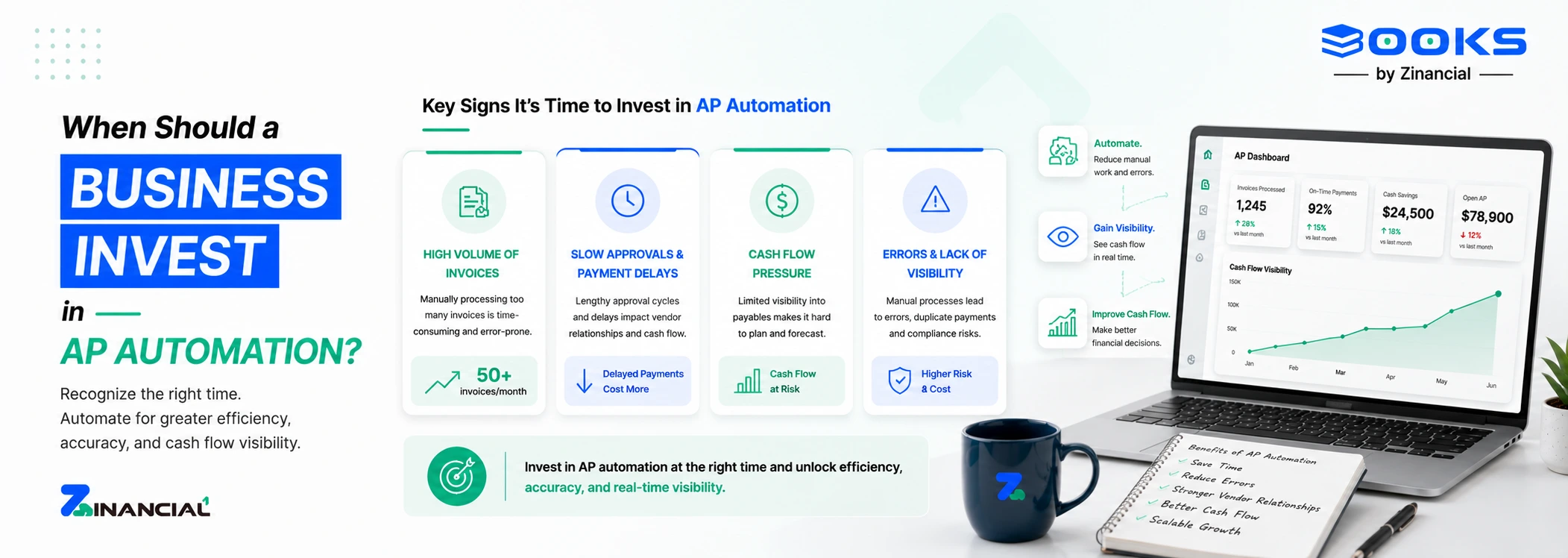
Accounts payable rarely breaks overnight. It stretches quietly. One extra invoice here. One delayed approval there. Then suddenly, your team is spending entire days chasing bills instead of closing books.
If you are asking when to invest in AP automation software, you are already feeling that stretch. This is not a question startups ask out of curiosity. It shows up when volume, risk, or internal pressure starts climbing.
This blog is built to help you decide timing, not features. You will see real signals, day-to-day scenarios, and practical thresholds that indicate when AP tools stop being optional and start becoming necessary.
In the early days, AP feels manageable. A shared inbox. A spreadsheet. One person who knows where everything lives. That setup works until it does not.
Here is what usually changes first:
- Invoice counts increase faster than headcount
- Vendors introduce varied billing formats
- Approval chains grow longer
- Payment cycles stretch without warning
Manual AP struggles because it depends on memory and follow-ups. Growth removes both.
A common pattern appears around 200-300 invoices per month. At this stage, small delays compound. Duplicate entries slip in. Payment runs become reactive.
This is where finance automation enters the conversation. Not because automation is trendy, but because manual handling no longer matches transaction load.
Over 50% of North American CFOs report that digital transformation of finance is their top priority for 2026, and 87% see AI as very important for finance operations.
Talk to our team to map your AP volume against growth.