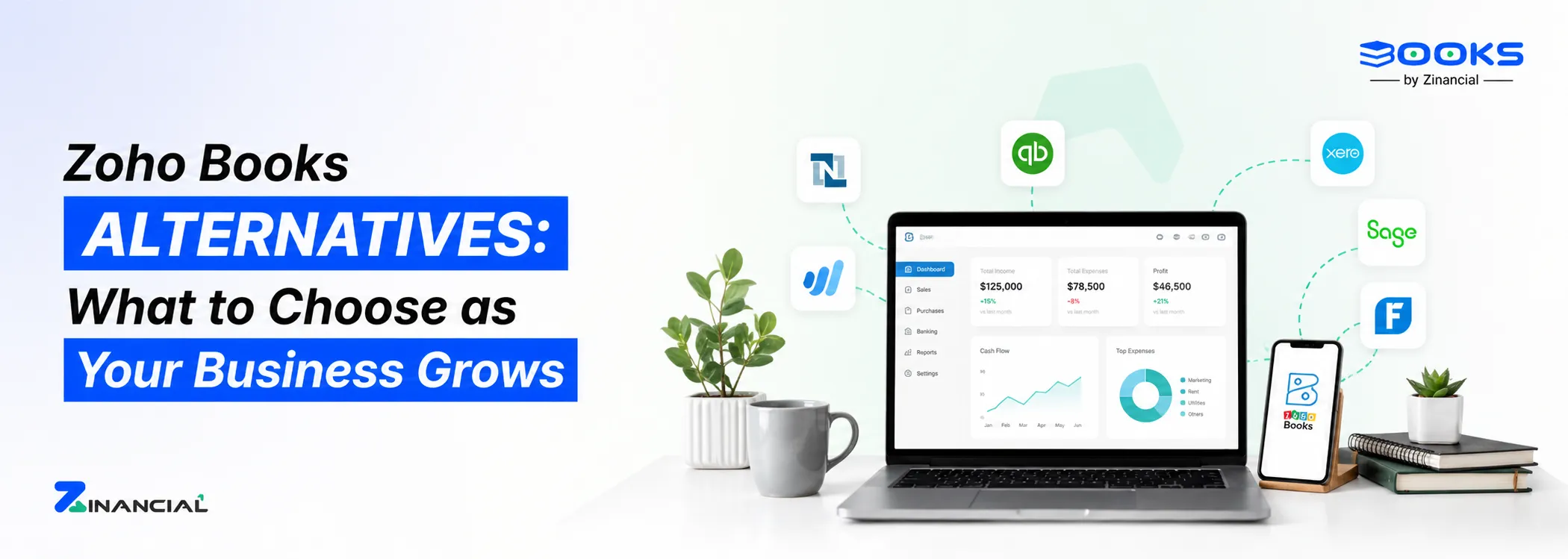
If you are searching for Zoho Books alternatives, your business has likely outgrown basic bookkeeping. Transactions are higher, reviews take longer, and decisions now depend on clean, timely numbers. Zoho Books often works well early on, but friction appears once operations become layered.
This guide breaks down credible Zoho Books competitors, explains how to evaluate them without feature fatigue. It also shows where Zinancial Books fits when tools alone stop being enough. The goal is not to push a switch, but to help you choose what actually works for your stage.
Zoho Books is designed for structured, predictable workflows. As your business adds revenue streams, locations, or entities, that structure can feel restrictive. Small inefficiencies start compounding into delays.
According to KPMG, automation in finance can reduce manual effort by up to 30%, highlighting the impact of structured processes on efficiency and consistency.
Most teams first notice the strain during month-end close. Reviews stretch longer, exceptions surface late, and reports need manual adjustments before sharing. Someone internally always ends up resolving accounting questions.
This is usually when teams start exploring Zoho Books alternatives. The assumption is that a different tool will remove friction. In practice, the friction often comes from unclear ownership rather than missing features.
Common triggers that lead businesses to reassess include:
- Increasing manual intervention during reconciliations
- Approval flows that do not match internal roles
- Reports that need spreadsheet cleanup
- Founder involvement in routine accounting issues
At this stage, switching software feels logical. But software rarely fixes execution gaps on its own. This is where models like Zinancial Books start to stand out by focusing on who owns the work and how it moves rather than just adding more features.