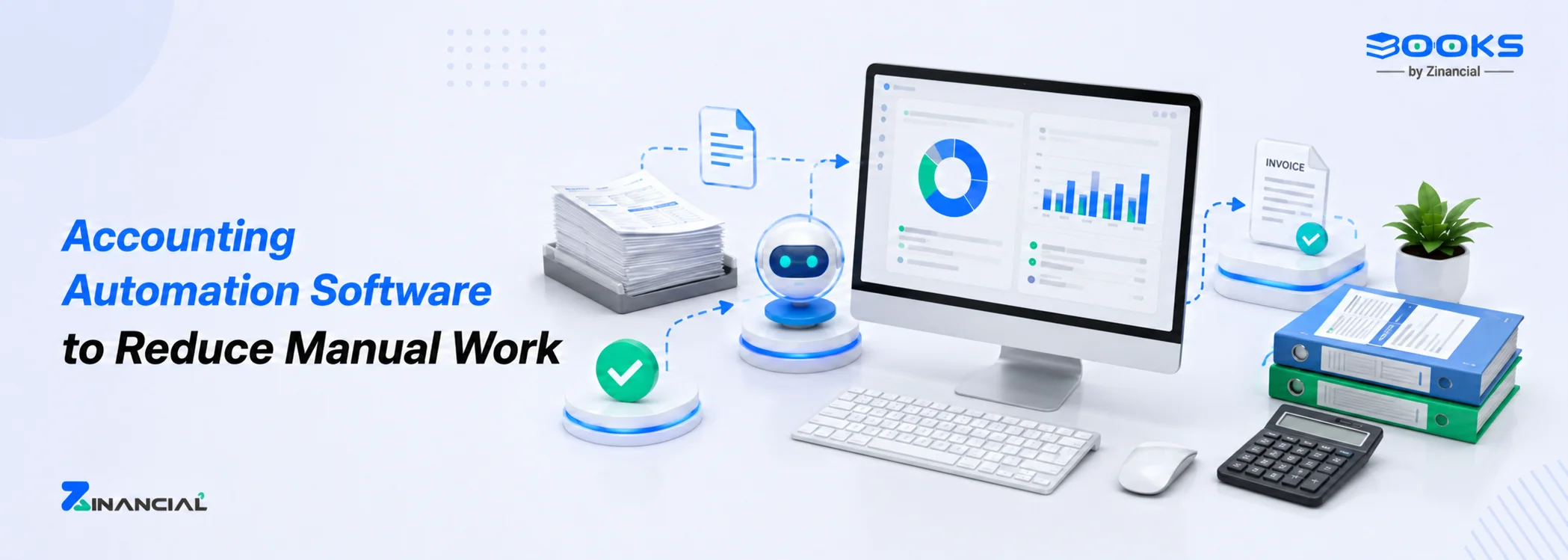
One approach that reflects this thinking is Zinancial Books, where automation is not treated as a plug-and-play checkbox but as a deliberate workflow redesign.
The key question we ask first is not “Which reports do you need?”, it is:
Where does your team spend repetitive effort that adds no strategic value?
Once that is mapped, automation follows in three core areas:
1.Transaction Capture and Categorization
Manual entry and categorization are among the biggest drains on time and accuracy. With accounting automation software, bank feeds sync directly into the system, transaction categories follow rule-based logic shaped by historical patterns, and exceptions are flagged automatically.
Industry data shows:
- Manual invoice processing declined from 85% to 60% in 2024, as automation adoption rises.
- RPA (robotic process automation) typically saves around 30% of the time spent on reconciliations.
The result is not just fewer keystrokes, it is consistent categorization, fewer month-end surprises, and more time for analysis.
2. Accounts Payable and Receivable
Manual AP/AR tasks are where cash flow gets stuck. Every missed reminder or mismatched bill questions funding forecasts and slows growth decisions.
With finance automation in Zinancial Books:
- Invoices are generated and tracked automatically.
- Payment reminders are scheduled based on rules you define.
- Vendor bills sync straight into your ledger.
Real-time cash position becomes the norm, not the exception, so you stop spending days chasing payments.
Most companies reconcile in bulk at month-end and treat it like a crisis. Automation turns it into a continuous process.
Instead of batching work once a month:
- Transactions reconcile as they occur.
This is finance automation working at the operational level, fixing small gaps before they become big headaches.